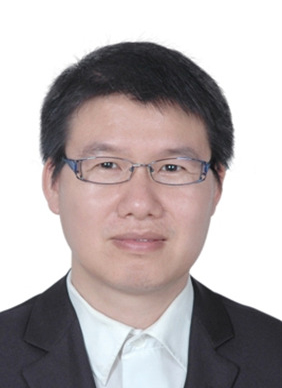
| Prof. Feifei GaoTsinghua University, China (IEEE Fellow, National Science Fund for Distinguished Young Scholars) Feifei Gao (Fellow, IEEE) received the B.Eng. degree from Xi'an Jiaotong University, Xi'an, China in 2002, the M.Sc. degree from McMaster University, Hamilton, ON, Canada in 2004, and the Ph.D. degree from National University of Singapore, Singapore in 2007. Since 2011, he joined the Department of Automation, Tsinghua University, Beijing, China, where he is currently a tenured full professor. Prof. Gao's research interests include signal processing for communications, array signal processing, convex optimizations, and artificial intelligence assisted communications. He has authored/coauthored more than 200 refereed IEEE journal papers and more than 150 IEEE conference proceeding papers that are cited more than 25000 times in Google Scholar. Prof. Gao has served as an Editor of IEEE Transactions on Wireless Communications, IEEE Journal of Selected Topics in Signal Processing (Lead Guest Editor), IEEE Transactions on Cognitive Communications and Networking, IEEE Signal Processing Letters (Senior Editor), IEEE Communications Letters (Senior Editor), IEEE Wireless Communications Letters, and China Communications. He has also served as the symposium co-chair for 2019 IEEE Conference on Communications (ICC), 2018 IEEE Vehicular Technology Conference Spring (VTC), 2015 IEEE Conference on Communications (ICC), 2014 IEEE Global Communications Conference (GLOBECOM), 2014 IEEE Vehicular Technology Conference Fall (VTC), as well as Technical Committee Members for more than 50 IEEE conferences. Speech Title:Key Technologies and Prototype Design for Integrated Sensing and Communications System Abstract: In the future, millions of base stations (BSs) and billions of users (UEs) will natively build an integrated sensing and communications (ISAC) system, which can utilize intelligent ubiquitous methods to realize the ultimate goal of sensing, i.e., constructing the global mapping from real physical world to digital twin world, while providing communications services at the same time. For this purpose, we conduct a series of theoretical and technical researches on ISAC, in which we decompose the real physical world into static environment, dynamic targets, and various object materials. The ubiquitous static environment occupies the vast majority of the physical world, for which we design static environment reconstruction (SER) scheme to obtain the layout and point cloud information of static buildings. The dynamic targets floating in static environments create the spatiotemporal transition of the physical world, for which we design comprehensive dynamic target sensing (DTS) scheme to detect, estimate, track, image and recognize the dynamic targets in real-time. The object materials enrich the electromagnetic laws of the physical world, for which we develop object material recognition (OMR) scheme to estimate the electromagnetic coefficient of the objects. Finally, based on these theoretical researches, we build an ISAC hardware prototype platform working in millimeter wave frequency band, realizing high-precision SER, DTS, and basic OMR, which provides preliminary verification for building the digital twin for communications networks. |

| Prof. Chengwen XingBeijing Institute of Technology, China (National Science Fund for Distinguished Young Scholars) Chengwen Xing (Member, IEEE) received the B.Eng. degree from Xidian University, Xi’an, China, in 2005, and the Ph.D. degree from The University of Hong Kong, Hong Kong, China, in 2010. Since September 2010, he has been with the School of Information and Electronics, Beijing Institute of Technology, Beijing, China, where he is currently a Full Professor. From September 2012 to December 2012, he was a Visiting Scholar at the University of Macau, Macau, SAR, China. His current research interests include machine learning, statistical signal processing, convex optimization, multivariate statistics, array signal processing, and high-frequency band communication systems. |
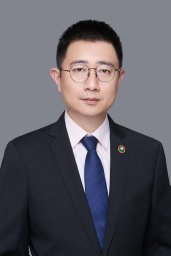
| Prof. Fangqing WenChina Three Gorges University Dr. Wen Fangqing ist derzeit Professor und Doktorvater an der Fakultät für Informatik und Informationswissenschaften der Drei-Schluchten-Universität, Senior Member des IEEE, Senior Member der Chinese Institute of Electronics sowie als herausragendes Nachwuchstalent der Provinz Hubei ausgezeichnet. Er ist Mitglied des Redaktionsbeirats verschiedener internationaler Fachzeitschriften, darunter IEEE Sensors Journal, IEEE Systems Journal, Signal Processing, IEEE Open Journal of Signal Processing, Electronics Letters sowie der chinesischen Fachzeitschriften „Datenerfassung und -verarbeitung“ und „Technologien zur Informationsbekämpfung“. Seine Forschungsschwerpunkte liegen im Bereich der Array-Signalverarbeitung. Er leitete zwei Projekte der Nationalen Naturwissenschaftlichen Stiftung Chinas sowie zahlreiche Projekte auf Provinz- und Ministerialebene. Er wurde mit dem dritten Preis der Naturwissenschaftlichen Auszeichnung der Provinz Hubei ausgezeichnet, hat über 80 SCI-indexierte Artikel veröffentlicht und 18 Patente erhalten (darunter ein US-Patent). Er wurde kontinuierlich in die „Ranking der wissenschaftlichen Einflussreichsten des Jahres“ und war Vorsitzender von Nebenveranstaltungen bei ACES 2019, IEEE SAM 2020, Radar 2021, IEEE ICCT 2023, ICSIDP 2024 und RICAI 2024. |
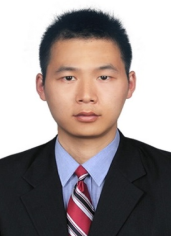
| Prof. Liang YangHunan University, China Yang Liang, PhD, Professor. His main research areas are wireless communication and optical wireless communication. He has published over 100 SCI journal articles in renowned domestic and international academic journals, including over 80 IEEE journal articles in core international journals such as IEEE-JSAC, IEEE-TCOM, IEEE-TVT, IEEE-TWC, and IEEE-TIFS. His H-index is 34, and he has been selected as one of the top 2% of scientists globally by Stanford University for three consecutive years. He has led 5 National Natural Science Foundation of China (NSFC) projects and 1 National Key Research and Development Program of China project, and participated in 1 key project of the NSFC Regional Innovation Development Joint Fund (project leader). He serves on the editorial boards of several international journals (such as IEEE-TCOM, IEEE-WCL, and IEEE-COMML). He is the recipient of the second prize of the Hunan Provincial Natural Science Award in 2019 (ranked first), the Outstanding Scientific and Technological Worker of the Chinese Institute of Electronics in 2021, and the Best Editorial Board Member of IEEE WCL in 2020. Speech Title: Toward 6G: Next-Generation Network Architectures and Enabling Technologies Abstract: This report focuses on 6G network architectures and enabling technologies, particularly the integration of Space-Air-Ground Integrated Networks (SAGIN) with Reconfigurable Intelligent Surfaces (RIS). As emerging applications such as IoT, autonomous driving, and remote communications demand ultra-low latency, high bandwidth, and full coverage, traditional systems face growing limitations. The report highlights various RIS architectures—passive/active, single-/multi-layer, and transmit/receive/relay types—and their critical roles in channel reconfiguration and anti-jamming, demonstrating their potential to enhance communication performance in complex environments. |